The Masters Who Shaped the Tradition
Los maestros que formaron la tradición
Historical profiles based on Okinawa’s official karate heritage account, the World Shitō-ryū Karatedō Federation history, and the official Inoue-ha biography. The chapters distinguish direct instruction from broader technical influence.
Perfiles históricos basados en el patrimonio oficial del karate de Okinawa, la historia de la Federación Mundial de Shitō-ryū y la biografía oficial de Inoue-ha. Se distingue la enseñanza directa de la influencia técnica más amplia.
Ankō Itosu · 糸洲安恒
1831–1915
Itosu helped transform karate from private instruction into an educational practice. His 1908 letter advocated the value of training for students, and the Pinan series is closely associated with his educational reforms. He influenced a generation of practitioners, including Kenwa Mabuni and Gichin Funakoshi. Itosu’s contribution was not simply a set of techniques: he helped establish a model for teaching karate systematically to larger groups.
Itosu contribuyó a transformar el karate de enseñanza privada en práctica educativa. Su carta de 1908 defendió su valor para los estudiantes, y la serie Pinan se asocia estrechamente con sus reformas. Influyó en Kenwa Mabuni y Gichin Funakoshi. Su aporte fue también pedagógico: abrió el camino para enseñar karate sistemáticamente a grupos más amplios.
Kanryō Higaonna · 東恩納寛量
1853–1915
Higaonna was a defining teacher of Naha-te. His methods emphasized rigorous conditioning, breathing, close-range technique and the preservation of kata. His influence reached Chōjun Miyagi, who founded Gōjū-ryū, and Kenwa Mabuni, who studied both Naha and Shuri traditions. Stories of his Chinese studies are important to lineage memory, although details vary among historical accounts.
Higaonna fue un maestro fundamental de Naha-te. Sus métodos destacaban el acondicionamiento, la respiración, las técnicas de corta distancia y la conservación de kata. Influyó en Chōjun Miyagi, fundador de Gōjū-ryū, y en Kenwa Mabuni. Los relatos sobre sus estudios en China son importantes, aunque algunos detalles difieren entre fuentes.
Kenwa Mabuni · 摩文仁賢和
1889–1952
Mabuni studied with Itosu and Higaonna and pursued an unusually broad investigation of Okinawan kata. His work preserved teachings associated with multiple streams rather than limiting practice to one narrow repertoire. After moving to Osaka, he taught and systematized the style later recognized as Shitō-ryū, whose name honors his two major teachers. His commitment to preservation, analysis and transmission is a foundational principle for the subsequent lineages.
Mabuni estudió con Itosu e Higaonna e investigó una variedad excepcional de kata de Okinawa. Conservó enseñanzas de diversas corrientes y no se limitó a un repertorio reducido. Tras trasladarse a Osaka, difundió y sistematizó el estilo Shitō-ryū, cuyo nombre honra a sus dos maestros principales. Su dedicación a conservar, analizar y transmitir constituye una base esencial de los linajes posteriores.
Kōsei Kuniba · 国場幸盛
20th century
A senior student of Kenwa Mabuni, Kuniba helped sustain Shitō-ryū through Seishin-kai and became Teruo Hayashi’s principal early instructor. The organizational succession following his death illustrates how martial transmission depends on both technical teaching and stewardship. Hayashi later returned leadership to Kuniba’s son Shōgō, an important event in the history of this branch.
Discípulo destacado de Kenwa Mabuni, Kuniba contribuyó a preservar Shitō-ryū mediante Seishin-kai y fue el principal instructor inicial de Teruo Hayashi. La sucesión organizativa tras su muerte muestra la importancia de la enseñanza y de la responsabilidad institucional. Hayashi entregó posteriormente el liderazgo a Shōgō, hijo de Kuniba.
Shōshin Nagamine · 長嶺将真
1907–1997
Nagamine was a major Okinawan karate teacher and founder of Matsubayashi-ryū. He preserved and taught kata associated with the Shuri and Tomari traditions. His teaching was among the Okinawan influences sought by Teruo Hayashi, demonstrating that Hayashi’s technical research crossed school boundaries.
Nagamine fue un importante maestro de Okinawa y fundador de Matsubayashi-ryū. Conservó y enseñó kata vinculados a Shuri y Tomari. Teruo Hayashi estudió con él durante sus investigaciones en Okinawa, ejemplo de la búsqueda de conocimientos más allá de una sola escuela.
Kenkō Nakaima · 仲井間憲孝
1911–1989
Nakaima preserved Ryūei-ryū, a family martial tradition with Chinese connections. The official Inoue-ha account describes how Hayashi earned access to Nakaima’s instruction after a sustained period of effort and trust. This transmission broadened the kata and martial principles that informed Hayashi-ha. The exact interpretations of individual Ryūei-ryū kata names should be checked against specialist lineage sources.
Nakaima conservó Ryūei-ryū, tradición marcial familiar con vínculos chinos. La historia oficial de Inoue-ha relata que Hayashi logró acceder a sus enseñanzas tras un período de esfuerzo y confianza. Esta transmisión amplió los principios y kata que influyeron en Hayashi-ha. Los significados de los nombres de cada kata requieren consulta con fuentes especializadas.
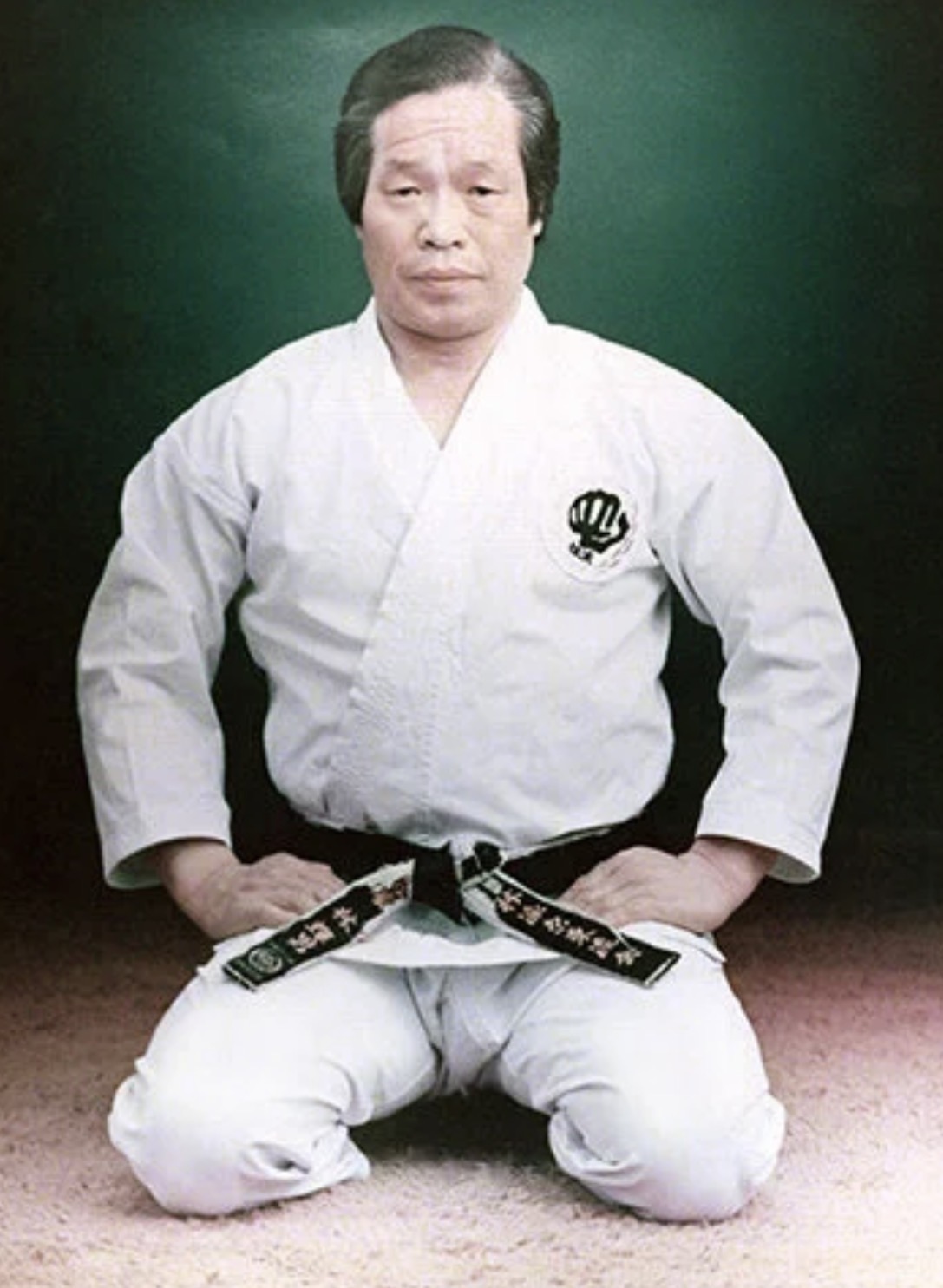
Teruo Hayashi · 林輝男
1924–2004
Hayashi combined rigorous Shitō-ryū instruction under Kuniba with research among Okinawan teachers, including Nagamine and Nakaima. He founded Hayashi-ha Shitō-ryū and Kenshin-ryū Kobudō. The official Inoue-ha biography records his challenging training approach and his responsibility for Seishin-kai before transferring leadership to Shōgō Kuniba. His lasting influence includes the training of Yoshimi Inoue as his resident disciple.
Hayashi combinó una formación rigurosa de Shitō-ryū con Kuniba y estudios en Okinawa con Nagamine y Nakaima. Fundó Hayashi-ha Shitō-ryū y Kenshin-ryū Kobudō. La biografía oficial de Inoue-ha describe su exigente entrenamiento y su responsabilidad al frente de Seishin-kai antes de entregar la dirección a Shōgō Kuniba. Su legado incluye la formación de Yoshimi Inoue como discípulo interno.
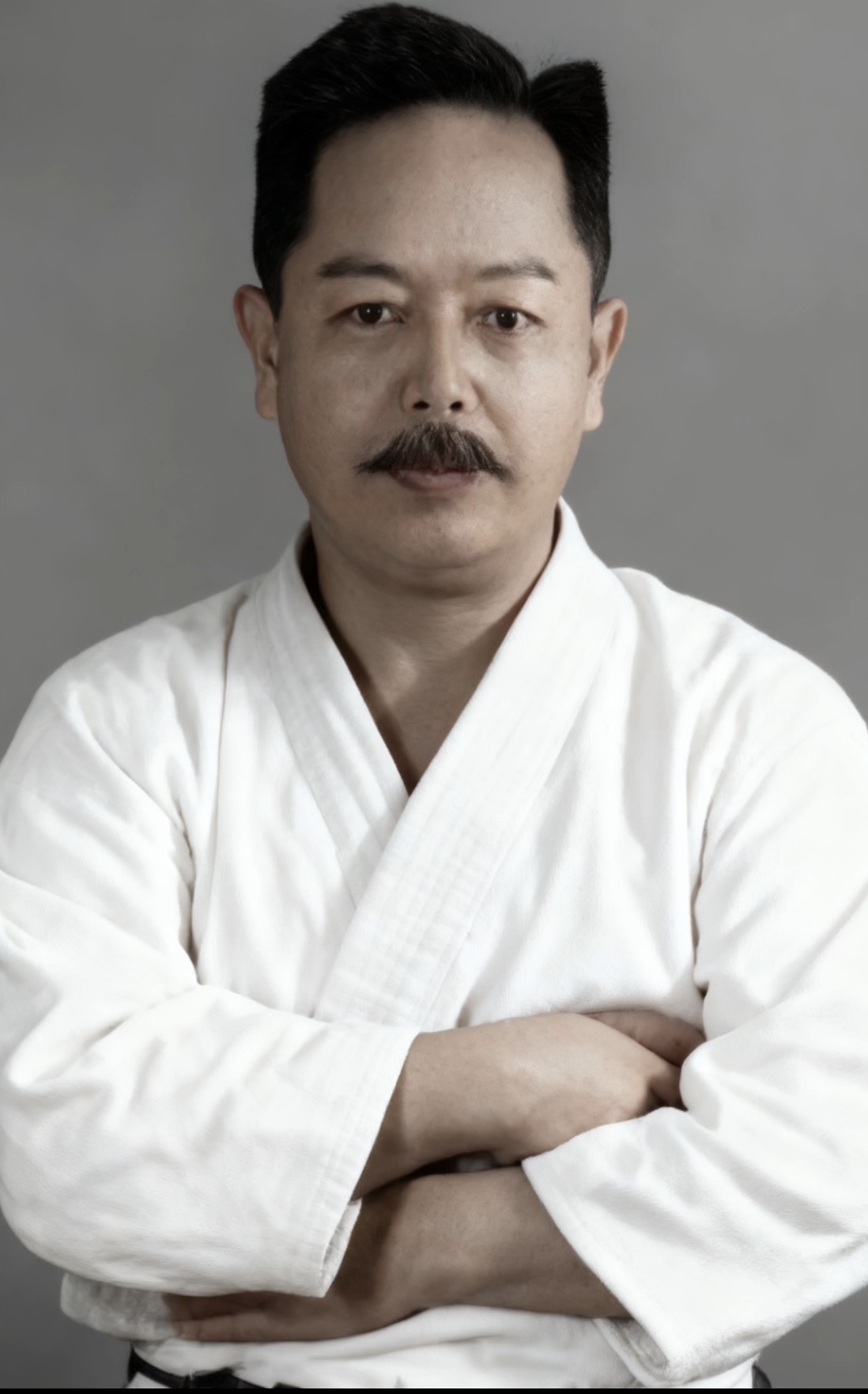
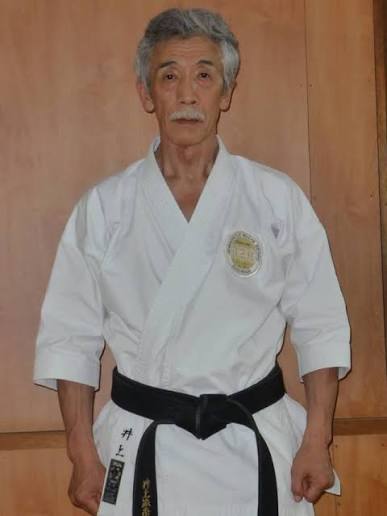
Yoshimi Inoue · 井上慶身
1946–2015
Inoue began Shitō-ryū in Tottori and traveled to Osaka at eighteen to train with Hayashi. As his sole live-in disciple, he experienced an intense schedule of dōjō work, fundamentals, teaching and kumite. He later developed the Tottori dōjō into an internationally influential kata center. After Hayashi’s death, he founded Inoue-ha Shitō-ryū Keishin-kai in 2005, leaving a legacy of exacting technical standards and international teaching.
Inoue comenzó Shitō-ryū en Tottori y viajó a Osaka a los dieciocho años para estudiar con Hayashi. Como su único discípulo interno, practicó intensamente fundamentos, enseñanza y kumite, además de asumir responsabilidades del dōjō. Más tarde convirtió su centro de Tottori en una referencia internacional para el kata. Tras la muerte de Hayashi fundó Inoue-ha Shitō-ryū Keishin-kai en 2005.
Historical Okinawa photo collections
Colecciones fotográficas históricas de Okinawa
The 1936 gathering of leading Okinawan karate masters is preserved by Densho and the Oregon Historical Society. The Okinawa Prefectural Archives provides a searchable photo collection with published attribution requirements. These are linked as archival sources, not silently copied or altered.
La reunión de maestros de karate de Okinawa de 1936 está documentada por Densho y la Oregon Historical Society. El Archivo Prefectural de Okinawa ofrece una colección fotográfica con requisitos de atribución. Estas fuentes se enlazan sin copiar ni modificar las imágenes de manera engañosa.
1936 · Eight Okinawan Karate Masters · Densho Archive ↗
Okinawa Prefectural Archives · Historic Photographs ↗
Editorial policy: authentic photographs will be placed next to named masters only when the identity and reuse rights have been verified. Restored or colorized photographs will be explicitly labeled.
Política editorial: se publicarán retratos junto a los nombres solo tras verificar identidad y derechos de uso. Las fotografías restauradas o coloreadas llevarán una indicación explícita.
Extended Biographies · Historical Masters
Biografías ampliadas · Maestros históricos
Explore substantial research chapters on Matsumura, Matsumora, Funakoshi, Miyagi, Motobu, Chibana, Uechi and Mabuni, with documented sources and careful lineage distinctions.
Explore capítulos de investigación sobre Matsumura, Matsumora, Funakoshi, Miyagi, Motobu, Chibana, Uechi y Mabuni, con fuentes históricas y distinciones claras entre linajes.
Read the new research chapters →Help preserve and share Karate history
Ayude a preservar y compartir la historia del Karate
Invite students, families and instructors to explore our documented history and historical research.
Invite a estudiantes, familias e instructores a conocer nuestra historia e investigación documentada.